
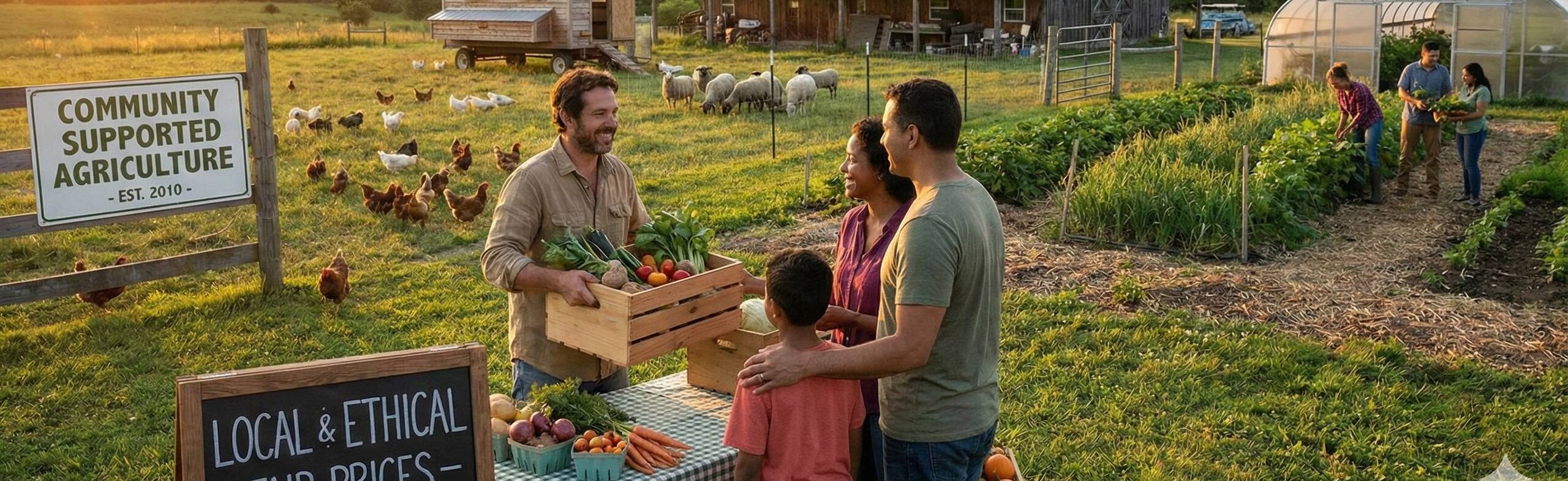
Food production must increase by 70 percent to meet the needs of a growing world population that is largely urban and likely to be more financially affluent than before; But the important question is how the industry responds to this need to provide food in a sustainable and ethical way. Food production is one of the key categories that needs attention along with issues related to food consumption, food waste, improving nutrition and food security.
One of the questions that have been raised today, in addition to food production, is the issue of sustainable and ethical food production. Therefore, if you are interested in the topic of sustainable and ethical food production and want to know more about it, stay with Florinio until the end of this article to learn more about it.
Now it is necessary to know to what extent man is allowed to use nature to meet his needs. What is important is only the technical and engineering methods of food production? Are there other issues that will cause new problems in the future if not paid enough attention to them? One of these cases is the importance of observing ethical principles in dealing with nature and in food production, which is called environmental ethics.
Food products must be “nutrient-dense” to be used in a balanced diet. Also, more food should be produced using less land area. In addition, water and energy are limiting factors for food production in the current situation; Therefore, it is necessary to examine the concept of sustainable food before anything else.
What is sustainable food production?
Sustainable food production is “a method of production using processes and systems that are non-polluting, conserve non-renewable energy and natural resources, are economically efficient, safe for workers, communities and consumers, and do not compromise the needs of future generations.” ». According to this definition, it will be a stable system that can approach the highest standards in these fields in all the mentioned dimensions.
Environmental effects of food production
Global food production methods must be changed in such a way as to minimize the impact on the environment and maintain the capacity of the world’s resources to produce food in the future. Like other man-made activities, food production has led to climate change, water scarcity, soil degradation and biodiversity destruction. It seems that 25% of the total global greenhouse gas emissions are directly caused by the production of agricultural, livestock and forestry products. Agricultural lands cover 37% of the earth’s surface, and agricultural and livestock sectors use a total of 70% of the world’s fresh water resources.
In order to know what kind of environmental effects the production of food or a specific product has, we must pay attention to issues such as the place and method of food production and local access to natural resources such as water and soil, but so far there has not been a simple set of principles to evaluate this issue. Is one food product more environmentally sustainable than another? The environmental effects of agricultural food production are very impressive. Another one of these cases is the issue of environmental protection, which can be evaluated and improved in different dimensions. Some of these dimensions are:
Climate change and deforestation
These two factors are key factors in environmental sustainability. Climate change refers to long-term changes in the Earth’s normal weather patterns, while deforestation refers to the loss or reduction of forested land in favor of industrial production. Deforestation actually has a mixed effect; Because it contributes to climate change by reducing forest land that removes excess carbon from the atmosphere. Efforts to combat climate change, deforestation and promote good forest stewardship focus on priority supply chains for products including palm oil, soybeans, beef and paper.
Palm oil
Palm oil is the most common vegetable oil in the world, which is naturally free of trans fat and has a wide variety of applications in the food system and other industries, including cosmetics and biofuels; But its impact on the food system is complex and not well understood. Since oil palm is a tropical crop that grows under specific conditions, its source is limited to designated areas near the equator. Considering that the demand for palm food production continues to increase, the clearing of forests for the production of this plant has caused the destruction of the habitats of endangered species such as orangutans, as well as the loss of biodiversity.
Soy
Soybean is also a common ingredient all over the world and is actually considered the main source of protein in the world. This agricultural product is also rich in essential amino acids, which makes it a useful and available substance. In addition to cooking, soy is widely used as animal feed, which is then turned into human food; While soybeans produced in some countries have a sustainability certificate, its production in certain regions is associated with deforestation. A large part of natural resources such as water must be used in soybean production; Therefore, efforts to produce food and improve the supply of this product include developing sustainable production methods and encouraging biodiversity.
Beef
Because cows excrete methane both through their mouths and through flatulence, the issue of greenhouse gases in animal feed production is a key priority in efforts to achieve sustainability. However, significant progress has been made to reduce the environmental impact of cattle ranches. Advances in production methods and technology that reduce food waste and increase efficiency; This means that fewer cows can produce more food. In Brazil and other areas where forests are converted to pastures for beef cattle, tropical deforestation is linked to the production of food products such as beef.
Vegetarian options
According to the 2020 Food and Health Surveys by the International Food Information Council, consumption of protein from plant sources and plant-based meat and dairy alternatives has increased in recent years. This trend may be partly due to the efforts of people to reduce the carbon footprint in the production of their products. This is an issue that has been seriously considered in food production. Some believe a plant-based lifestyle is the best approach for the planet, but some lifestyles affirm that it includes both plant-based options and sustainably sourced animal foods.
Paper
Paper packaging is quite common in the food industry today; Therefore, many restaurants have switched their services to take-out mode after the outbreak of Covid-19, and for this reason, the use of packaging has become more important. In this case, if the forests are not managed responsibly, the demand for paper can have a direct impact on deforestation. Recycling is another key component to ensuring a sustainable and ethical paper supply chain.
Measures to make food production more sustainable
The European Commission is evaluating the best way to reduce the environmental impact of food production and limit waste throughout the food supply chain. By 2020, the goal is to reduce the consumption of inputs in the food production chain by 20%. This category is done by allocating incentives for more sustainable food production and consumption.
In order to quickly move towards this goal using current technologies and knowledge, different measures are needed in the agricultural sector. Some measures to make food production more sustainable (as introduced by the European Commission and the sustainability programs of food producing companies) are:
- Optimum use of natural resources: for example, we can refer to actions aimed at reducing fossil fuels, optimizing water consumption, reducing water pollution, reducing greenhouse gas emissions, preserving soil, and increasing biodiversity.
- Protection of marine resources: Marine resources are also part of natural resources that need to be exploited in a sustainable manner; For example, fishing using sustainable principles, eliminating by-catch and reducing marine pollution.
- Production of food from sustainable sources: it is necessary to use as little as possible resources or those that cause instability to prepare food or to eliminate them altogether; For example, the development of sustainability initiatives such as those of the Marine Stewardship Council and roundtables on palm oil consumption.
- Using recyclable food packaging to protect the environment: The pollution of plastic materials around the world has become one of the main concerns of mankind today. In this regard, the additional aspects of packages should be removed as much as possible; For example, using optimal packaging or using recycled materials with low environmental impact.
- Reduction of food waste: Food waste is one of the most important issues in the current situation in the world. Some believe that efforts to reduce the volume of this part of the food industry can be a big step to solve the problem of the need to produce more food in the world; For example, using technical strategies as much as possible are ways to reduce food waste. These strategies are carried out in order to increase the useful life of products and reduce the amount of waste that must be buried by recycling.
What is environmental ethics?
Environmental ethics is a branch of ethical thinking that focuses on the relationship between humans and the natural environment. This perspective is a comprehensive approach to understand and evaluate our moral obligations to protect and protect the environment. Environmental ethics seeks to bring together the interests of humans and the environment; Recognizing that both are interdependent and have intrinsic value.
A variety of ethical theories, including consequentialism, utilitarianism, and virtue ethics, define environmental ethics. These theories provide a framework for understanding our moral obligations to the environment and how we should act to protect it. Environmental ethics also draws from the fields of philosophy, economics, ecology, and law and provides a holistic approach to understanding and evaluating the ethical consequences of human actions.
Types of environmental ethics
- Libertarian development: Libertarian development is an environmental ethic that focuses on the right of individuals to do whatever they want with the environment and its resources. This concept also emphasizes that a person should not impose their values on others and instead should respect the choices of others.
- Ecological development: Ecological development is a type of environmental ethics that focuses on preserving the natural environment and its resources in order to maintain the balance and health of the ecosystem during food production. This concept emphasizes the importance of human behavior with nature with the aim of preserving it for future generations.
- Conservation ethics: Conservation ethics is a type of environmental ethics that focuses on preserving natural resources for future generations. It also ensures that current resources are not depleted or damaged. This concept encourages people to use natural resources responsibly and wisely so that it can be used and exploited sufficiently for future generations.
To sum up, libertarian expansion promotes the right of individuals to use natural resources and produce food; It is an ecological incentive for humans to work with nature, not against it. Conservation ethics also emphasizes the sustainable use of natural resources. Each type of environmental ethics has its own advantages and should be considered when considering how to protect the environment in the best way, but now the general question arises as to why environmental ethics is important in food production, which is answered below.
The importance of environmental ethics
Environmental ethics are important; Because it provides a moral framework for how humans interact with the natural environment. This helps us consider the effects of our actions on the planet. It also guides us in making more ethical and sustainable decisions. The following points indicate the importance of bioethics:
- Respecting the inherent value of nature: Nature should not be treated as a commodity or a resource to be exploited and wasted. In fact, environmental ethics helps to create better relationships with nature and recognizes its intrinsic value in addition to its instrumental value.
- Environmental ethics is necessary to protect the environment, species and resources.
- This vision promotes sustainable food production practices and encourages people to become more aware of the impact of their actions on the environment.
- Emphasizes the unity of all living beings and the need to respect them. This encourages us to think more deeply about our place in the world and how we can contribute to the preservation of the natural environment. It is necessary to know that there is mutual dependence between species and ecosystems. Humans depend on nature and natural systems. In the meantime, we must recognize our role in preserving and protecting the environment. In this view, man is placed in the position of guardian of nature, not its ruler.
- Environmental ethics encourages us to think beyond our immediate needs and consider the long-term consequences of our actions.
- It teaches us to be responsible for our environment and support environmentally friendly practices that help conserve natural resources.
- Environmental ethics also promotes better public policies and laws that ensure proper care of the environment.
Examples of environmental ethics
One of the examples of environmental ethics in food production is the use of renewable energy sources. Renewable energy sources, which are considered as types of energy, are created again naturally and can be used without reducing natural resources. Examples of renewable energy sources are: solar, wind and hydro-electricity. Renewable energy sources are a moral choice; Because they do not cause pollution or reduce limited resources. Since humans rely on their knowledge and technologies to use all their facilities to produce food, it is necessary to speak clearly about the issue of ethics in food production.
Another example of environmental ethics in practice is the use of sustainable agricultural methods; Methods designed to ensure that land and resources used in agriculture remain productive and can be used in the future. Examples of sustainable agricultural practices include crop rotation, integrated pest management, and conservation tillage. Ultimately, sustainable forestry practices are an example of environmental ethics in action. Sustainable forestry practices are designed to ensure that forests are managed in such a way that their biodiversity and ecological integrity are maintained. Examples of sustainable forestry practices include selective harvesting, reforestation, and old-growth forest protection.
The question may be raised as to what is the difference between ecology and bioethics. For the answer, it is necessary to know that ecology is the scientific study of the relationships between organisms and their environment; While environmental ethics focuses on how humans interact with the natural environment. Ecology deals with how organisms interact with each other and with their environment. On the other hand, environmental ethics describes how humans interact with the natural environment in order to minimize damage and promote sustainability in food production.
Complexities of Ethical Food Production
For a very long time, the main feature of food choices for consumers was only the taste of the food. However, today’s consumers also pay attention to the value of other considerations, including social justice, animal welfare, and environmental stewardship. All these things affect their food and drink buying habits. As awareness and practice continue to evolve, the idea of “food ethics” is being taken more seriously. “Ethics in food production” refers to considering the economic, social and environmental consequences of buying or consuming foods and beverages.
The role of ethics in food production has become increasingly a priority for the food and agriculture industries as well as the value-oriented consumer. Even today, significant advances have been made for animal welfare, social justice, and environmental stewardship. In this regard, industry and consumers can work together to move towards a more sustainable and ethical supply chain.
What is ethics in food production?
Ethical food production involves consideration of people (welfare of workers, whether on small farms, production cooperatives, estates or large farms), environment (focusing on environmental sustainability) and animals (mainly related to animal rights and welfare); Therefore, in addition to the pillars of sustainable food production, ethical production also considers animal welfare. For many people, protecting workers’ rights is very important. Issues such as equal pay, gender equality, diversity, forced labor, child labor and more are complex considerations. One of these important matters is the welfare of animals and their place in the production of food in an ethical and sustainable manner, which is mentioned below:
Human behavior with animals
Many stakeholders (government agencies, commodity groups, third-party certification bodies, special interest groups, and others) set standards for the humane treatment of animals in the food supply chain; Among them, those that are intended for food and labor production. In the European Union, the Lisbon Treaty considers animals as sentient beings; In the sense that they are able to feel pleasure and pain; As a result, the European Commission has adopted a new strategy to improve animal welfare conditions; Such as how to keep, feed, transport and kill them. Although there is no universal definition of the concept of “animal welfare”, the World Health Organization considers the following conditions as a guiding principle for animals:
- Animals should not be kept in such a way that they experience excessive thirst, hunger and malnutrition for a long period of time.
- Animals should not be harmed and experience feelings such as discomfort and exposure to adversity and violence.
- The conditions of keeping animals should be such that they benefit from health facilities throughout their life and are safe from pain, injury and disease.
- The conditions of keeping animals should be in such a way that they do not feel fear and discomfort.
- Harsh upbringing methods and behaviors that are not in their nature should not be asked of them. Animals should be free to live according to their nature.
Ethics and environmental responsibility of consumers
Now, the role and responsibility of buyers in the process of stabilizing food production and complying with biological ethics on the part of producers should be examined. In this regard, it is necessary to first define the term “sustainable consumption”. Unlike conventional consumption, sustainable consumption considers the needs of future generations. In this case, the consumer seeks to use goods and services that meet his basic needs and bring him a better quality of life. At the same time, to minimize the use of natural resources, toxic substances and the emission of waste and pollutants during the life cycle, so as not to jeopardize the needs of the future generation.
Achieving this goal depends on how to consume in a different way and/or consume less. Sustainable consumption is often described as the same or similar to environmentally responsible behavior, environmentally friendly behavior, or ethical consumption, green consumption, and responsible consumption. They are also aligned with sustainable food production. This type of consumption refers to the use and disposal of services and goods (recycling) not only by individuals and families, but also by governments, businesses and other organizations. Sustainable consumption is closely related to sustainable production and sustainable lifestyle. Indeed, a sustainable lifestyle minimizes environmental consequences while enabling flourishing lives for individuals, families, communities, and beyond.
This lifestyle is the product of individual and collective decisions about desires, satisfaction of needs, and use of practices that are in turn conditioned and facilitated. These practices are constrained by social norms, political institutions, public policies, infrastructure, markets, and culture. Sustainable development as well as sustainable consumption relies on certain conditions, some of which are mentioned below.
- Effective use of resources and minimizing waste and pollution
- Using renewable resources to the extent of their capacity for renewal
- Product reuse and recycling so that consumable items are used to their maximum potential.
- Intergenerational and intergenerational equality
After being aware of the concept of sustainable consumption, the question now arises whether consumer choices can promote sustainability. In fact, the global consequences of environmental problems, especially climate change, affect both political programs and people’s daily lives. Since food consumption constitutes a significant part of the environmental burden of households, the sustainability of what we eat can play a very important role. This has led to the emergence of a new type of ethics that encourages consumers to engage in a kind of “moral self” for their choices. While most people believe that environmental challenges require shared responsibilities. How and to what extent consumers can bear these responsibilities is also a controversial issue.
In general, today many consumers act responsibly towards the environment and their environmental awareness has increased. They also emphasize their environmental requirements while making purchases. It can be said that environmentally responsible behavior of consumers is a reaction to socially responsible marketing, which highlights attention to social, ethical, legal and environmental aspects of business activities about their stakeholders. According to a special survey conducted in 2017, most Europeans believed that they could play a role in protecting the environment.
Therefore, we can hope that more people will be interested in the issue of protecting the environment and supporting products that are produced based on biological ethics. This is done by increasing the awareness of the general public about the importance of preserving the environment, environmental responsibilities and ethics in this field. The role of public media in this area can be very impressive. It is also hoped that soon the concern of protecting the environment in all its aspects, especially in food production, will become an all-encompassing thing all over the world.
Leave A Comment